
Tibial Transport Osteotomy for Diabetic Foot Ulcers
Advanced Limb-Salvage Treatment for Complex Foot Wounds
For patients with chronic diabetic foot ulcers, deep infections, or wounds that have not healed despite conventional treatment, amputation may sometimes seem like the only remaining option.
Tibial transport osteotomy is a specialized limb-salvage procedure designed to stimulate new blood vessel formation and support healing in the lower extremity. For carefully selected patients, it may offer an additional treatment option when other approaches have been unsuccessful.
At the Orthopedic Institute of North Texas (OINT), Dr. Justin Kane specializes in complex foot and ankle reconstruction and limb salvage. He works collaboratively with vascular surgeons, wound-care specialists, and infectious-disease physicians to evaluate treatment options for patients with limb-threatening conditions.
Although not every limb can be saved, a comprehensive evaluation can help determine whether additional treatment options may be appropriate.
What Is Tibial Transport Osteotomy?
Tibial transport osteotomy, also known as transverse tibial transport (TTT), transverse tibial transport osteogenesis (TTTO), or tibial cortex transverse transport, is a specialized surgical technique used in selected patients with severe or chronic lower-extremity wounds.
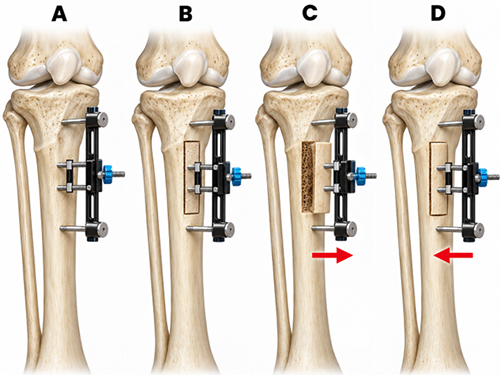
During the procedure, a small section of the tibia (shinbone) is surgically separated from the surrounding bone while preserving its connection to surrounding tissues. A specialized external fixation device is then used to gradually move the bone segment outward and return it toward its original position.
This controlled movement is intended to stimulate the formation of new blood vessels, a process known as angiogenesis, and improve circulation within the affected limb.
Unlike traditional bone-lengthening procedures, tibial transport osteotomy does not aim to lengthen the leg. Its primary purpose is to support the biological processes involved in wound healing.
How Does Tibial Transport Osteotomy Support Wound Healing?
Chronic diabetic foot ulcers can be difficult to heal because of several underlying conditions, including poor circulation, nerve damage, infection, and impaired tissue healing.
Even after conventional wound care or vascular treatment, some patients continue to experience wounds that do not heal adequately.
Tibial transport osteotomy uses controlled movement of a small bone segment to stimulate a biological response that may encourage new blood vessel formation and improve blood flow to affected tissues.
Published studies have reported improvements in circulation, wound healing, and limb preservation among selected patients treated with this technique.
However, tibial transport osteotomy does not replace essential treatments such as vascular evaluation, infection management, debridement, pressure offloading, diabetes management, or ongoing wound care.
It is considered as part of a comprehensive limb-salvage treatment plan.
Tibial transport osteotomy differs from traditional reconstructive limb-salvage procedures. While techniques such as Charcot foot reconstruction focus on correcting deformity and restoring structural stability, tibial transport osteotomy is intended to stimulate biological processes that may support circulation and wound healing. Depending on the patient's condition, these approaches may be considered separately or as part of a broader treatment plan.
Who May Be a Candidate for Tibial Transport Osteotomy?
Tibial transport osteotomy may be considered for patients with complex foot and ankle conditions that have not responded adequately to conventional treatment.
Potential candidates may include patients with:
- Chronic diabetic foot ulcers that have not healed despite appropriate wound care and pressure offloading.
- Recurrent or deep foot infections, including selected cases involving bone infection (osteomyelitis).
- Poorly healing wounds associated with reduced circulation, following appropriate vascular evaluation.
- Persistent wounds despite previous vascular treatment or limited conventional revascularization options.
- Charcot-related foot deformities or ulceration when reconstruction may still provide a stable, functional limb.
- Limb-threatening conditions for which amputation has been discussed but additional salvage options may remain.
Candidates must also be able to participate in the recovery process, which may involve external device care, regular follow-up appointments, wound management, and activity restrictions.
A comprehensive evaluation is necessary to determine whether the procedure is appropriate.
When Is Tibial Transport Osteotomy Not Recommended?
Tibial transport osteotomy is not appropriate for every patient.
In some cases, severe infection, extensive tissue damage, inadequate blood supply, significant medical conditions, or an inability to participate in recovery may make the procedure unsuitable.
When a limb cannot realistically be preserved or a severe infection threatens the patient's overall health, amputation may be the safest and most appropriate treatment.
The goal of limb-salvage care is not to avoid amputation at all costs, but to determine whether a safe and realistic pathway exists to preserve a functional limb.
What Does the Research Show About Tibial Transport Osteotomy?
Research on tibial transport osteotomy has shown promising results for selected patients with diabetic foot ulcers and other difficult-to-heal lower-extremity wounds.
A 2023 systematic review and meta-analysis involving 818 participants, including 661 patients treated with transverse tibial transport, reported pooled wound-healing and limb-salvage rates of approximately 96% and 98%, respectively.
A 2025 systematic review involving 13 studies and 924 patients also reported favorable findings related to wound healing, circulation, pain, and limb preservation.
Additionally, a 2022 prospective multicenter study reported increased small-vessel formation and improved blood flow following treatment, supporting the proposed biological mechanism of the procedure.
While these findings are encouraging, the evidence continues to evolve. Many studies involve selected patient populations treated at specialized centers, and further research is needed to establish long-term outcomes and optimal treatment protocols.
These published results do not represent guaranteed outcomes or expected success rates for individual patients. Treatment outcomes depend on factors such as wound severity, circulation, infection, underlying medical conditions, and adherence to postoperative care.
What to Expect During Treatment and Recovery
Tibial transport osteotomy is a specialized procedure that requires careful surgical planning and ongoing postoperative management.
The External Fixation Device
During surgery, a small section of the tibia is prepared and connected to a specialized external fixation device.
Following surgery, the device is adjusted according to a prescribed schedule to gradually move the bone segment outward and subsequently return it toward its original position.
Patients receive specific instructions for device management and pin-site care. Adjustments should only be performed according to the surgical team's directions.
Recovery and Follow-Up
Recovery varies depending on the severity of the wound, infection, circulation, overall health, and other treatments required.
Patients may need:
- Regular wound-care appointments and dressing changes.
- Pin-site care and monitoring of the external fixation device.
- Antibiotic treatment or additional procedures to manage infection.
- Continued vascular evaluation or treatment.
- Pressure offloading or restricted weight bearing.
- Follow-up imaging to evaluate healing and bone position.
- Ongoing diabetes management and nutritional support.
Some patients may be permitted to walk with appropriate protection, while others may require more restrictive activity limitations.
The duration of external fixation and overall recovery is individualized. Complete wound healing and functional recovery may take considerably longer than the period during which the device is in place.
What Are the Risks?
As with any surgical procedure, tibial transport osteotomy carries potential risks.
These may include pin-site infection, tibial fracture, wound complications, persistent infection, problems with the external fixation device, blood clots, and failure of wound healing or limb salvage.
Dr. Kane evaluates each patient's condition and discusses potential benefits, risks, and alternatives before recommending treatment.
Why Choose OINT for Advanced Limb Salvage?
Complex diabetic foot conditions often involve multiple factors, including infection, poor circulation, nerve damage, deformity, and impaired healing.
Successful limb-salvage care requires more than addressing a single wound. It depends on specialized surgical expertise, comprehensive evaluation, and coordinated medical management.
Dr. Justin Kane is a fellowship-trained orthopedic foot and ankle surgeon with extensive experience in complex reconstruction, diabetic foot complications, and limb-salvage procedures.
His approach emphasizes individualized treatment planning and collaboration with vascular surgeons, wound-care specialists, infectious-disease physicians, and other healthcare professionals.
This multidisciplinary approach helps address the underlying conditions that may affect healing while determining whether a stable, functional limb can be preserved.
Specialized Limb-Salvage Evaluations for Patients Across Texas
OINT provides specialized foot and ankle care for patients in Dallas, Frisco, and surrounding North Texas communities, as well as patients traveling from elsewhere in Texas and beyond.
Patients with complex wounds, recurrent infections, Charcot-related complications, or previous recommendations for amputation may benefit from a comprehensive limb-salvage evaluation.
For patients traveling from outside the Dallas–Fort Worth area, medical records and imaging may be reviewed in advance to help coordinate the evaluation process.
Frequently Asked Questions About Tibial Transport Osteotomy
Is tibial transport osteotomy the same as limb lengthening?
No. Although both procedures involve controlled bone movement, tibial transport osteotomy moves a small section of the tibia sideways and returns it toward its original position. The goal is to stimulate a biological response that may support wound healing, not to lengthen the leg.
Can tibial transport osteotomy prevent amputation?
For carefully selected patients, tibial transport osteotomy may offer an additional limb-salvage option when conventional treatments have been unsuccessful. However, it cannot guarantee wound healing or prevent amputation in every case.
Is tibial transport osteotomy a replacement for vascular surgery?
No. A comprehensive vascular evaluation remains essential. Some patients may require vascular procedures to improve arterial blood flow before or alongside other limb-salvage treatments.
Can tibial transport osteotomy be performed when a foot infection is present?
Potentially. Some patients with deep infections or osteomyelitis may be candidates, but infection must be appropriately managed. Treatment may involve surgical debridement, antibiotics, or additional procedures as part of the overall limb-salvage plan.
How long does recovery take?
Recovery depends on the patient's wound, circulation, infection status, and overall health. Treatment requires close monitoring, external device management, and ongoing wound care. The duration of external fixation and complete healing varies by patient.
Can I walk after tibial transport osteotomy?
Weight-bearing restrictions depend on the patient's individual condition and treatment plan. Some patients may be allowed protected weight bearing, while others require stricter offloading to protect the wound and support healing.
What if I have already been told I need an amputation?
If your condition is medically stable and there is sufficient time for further evaluation, a specialized limb-salvage consultation may help determine whether additional treatment options are available. However, amputation remains necessary in some cases, particularly when severe infection or tissue damage threatens overall health.
Does OINT evaluate patients from outside Dallas–Fort Worth?
Yes. Dr. Kane evaluates patients with complex foot and ankle conditions from across Texas and beyond. Patients traveling for a limb-salvage consultation may be asked to provide previous imaging, operative reports, vascular studies, and wound-care records before their appointment.
Explore Your Limb-Salvage Options
If you or a loved one has a diabetic foot ulcer, deep infection, or another limb-threatening condition that has not responded to conventional treatment, a specialized evaluation may help determine whether additional treatment options are available.
Dr. Justin Kane provides comprehensive evaluations for complex foot and ankle conditions, including cases in which amputation has been recommended. Treatment recommendations are based on each patient's medical needs, with a focus on preserving mobility and long-term function whenever safely possible.